

This is a university video-project made by "Game Design"-students from munich. Done in a single-shot fashion...well almost single shot =) The film covers different eras of the video-game history. Took us a week to organise the various props (controllers, monitors. lighting, camera, etc.), two whole days to film and several days of postproduction. It isn't perfect, but hopefully fun to watch nevertheless ,) Games: Tennis for Two, Oscilloscope, 1958 Pacman, Arcade, 1980 Donkey Kong, NES, 1986 Sonic the Hedgehog, Sega Mega Drive/Genesis, 1991 Street Fighter II. SNES, 1991 Super Mario 64, Nintendo 64, 1996 Final Fantasy VII, Sony Playstation, 1997 Need for Speed: Hot Pursiut 2, Sony Playstation 2, 2002 Ecco the Dolphin, Sega Dreamcast, 2000 Super Smash Bros. Melee, Nintendo Game Cube, 2001 Wii Sports Golf, Nintendo Wii, 2006 God of War III, Sony Playstation 3, 2010 Rock Band, XBox 360, 2008 Credits Music: "Luminous" by Geir Tjelta By: Moritz Freyer Fabian Steiner Florian Smolka Lucas Reiner Additional Special Thanks To: Lena Hartl for having the guts to lend us her cam =) Comments appreciated Thanks for watching! Keep on gaming...
History of Gaming
Thursday, July 21, 2011
NBA TV Top 10: April 24th
Friday, May 6, 2011
NBA's Top 10 Plays for April 24th, 2011, featuring LeBron James, Josh Smith, Lou Williams, and more.
The History of the Major League Baseball Playoffs
Wednesday, February 2, 2011
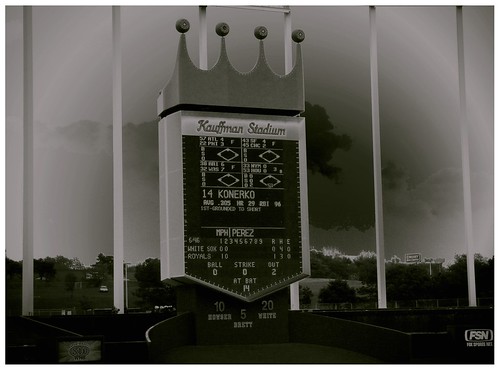
Image : http://www.flickr.com
The Major League Baseball Playoffs have been around since 1969.
The Playoffs were created because the American League and National League both split into eastern and western divisions. This meant that post season games between the two division champions were required to determine the pennant winner...and so the Major League Baseball Playoffs were born!
In 1994, the playoff system changed as each league was split into three divisions and a four team Major League Baseball playoff was created. However, the new MLB playoff system did not take place until 1995, as the 1994 season was never completed because of a player strike.
Since then, eight teams make the Major League Baseball playoffs. Four from both the American League and the National League.
In addition to the three division champions, the fourth team to be entered into the MLB playoffs is known as a wildcard. The wildcard team is the second place team with the best won-loss record.
After the 162 game season is over, the MLB Playoffs begin. This is usually in the first full week of October.
The first round of the MLB playoffs is the Division Series. This is a five game series that sees the top four teams in each league match up with each other.
The winners of the Division Series then advance to the seven game American League and National League Championship Series.
The winners of the ALCS and NLCS advance to the World Series.
I couldn't imagine baseball without having the MLB Playoffs, but this was the norm before 1969. In my opinion, the playoffs give an added boost to the already exciting atmosphere that the game of baseball creates...who knows what changes may occur to the rules of the Major League Baseball Playoffs in the future...I guess only time will tell!
The People Who Influence Soccer History
Thursday, December 23, 2010
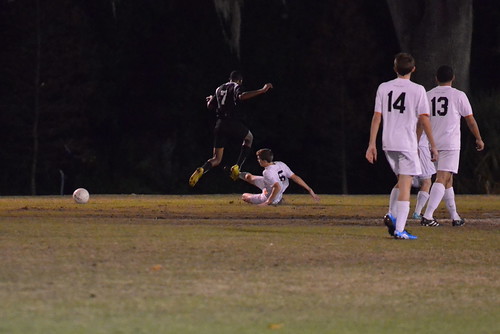
Image : http://www.flickr.com
Do you know that soccer game is influenced by the Chinese? The soccer history has a documentary evidence that such game or exercise which involves kicking a ball into a small net is evidently used during the Han Dynasty by the Chinese military around 2nd and 3rd centuries B.C. A field marked out to a ball-kicking game had also an earlier proof that has been found at Kyoto, Japan.
Frankly speaking it is quite impossible to accurately say where and when soccer game started. Although it is reasonable to assume that the game we have known today as soccer originated from some type of ball game which has been played at someplace in the planet for over 3000 years.
The Greeks and ancient Romans both played soccer like type game which has some similarities in a modern soccer, though during the early times, teams have up to 27 players.
The soccer history is quite hard to accurately figure out. Scotland and England was believed to be the co-founders of this organized game, Football, but Soccer is how it was called in Britain, became the most popular sport from the 8th century onwards. Britain is the birthplace of the modern soccer and association football.
Eton College, a famous English school, in 1815 developed a set of rules which later on standardized and had a version called the Cambridge Rules which was adopted by most of England's Universities and Colleges in 1848.
Eleven London clubs and schools sent their representatives on October 26, 7863 in the Freemason's tavern to create a single set of fundamental rules to administer the matches played amongst them. The meeting was then the creation of the Football Association.
German Soccer History
Tuesday, November 30, 2010
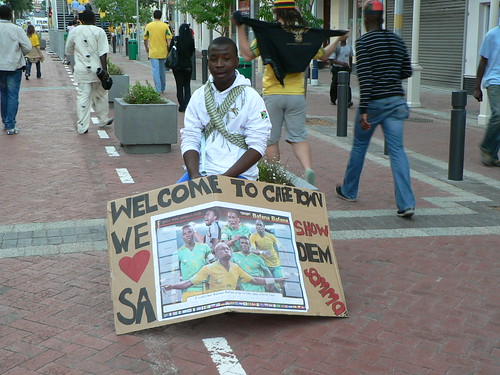
Image : http://www.flickr.com
German soccer becomes one of the most popular sports in Germany. From the 1950 to 1990, during World War II, the team was informally called West Germany.
In 1934, Germany tried to get together to build a team for 1934 World Cup and German soccer clubs even though the poor economic conditions during WWI Germany. And even after the World War II was over, the soccer team had to suffer. Most players had to join the armed forces in 1939 and 1942.
After World War II, they managed to form a team again for 1966's World Cup. And it was a
memorable match between England versus Germany called by German press and populary known as "Wembley Goal".
By the 1970 World Cup in Mexico, the so called "The game of the Century". The match against Italy with the score of 3-4, it became greatest moments because of its most talk about game of the century.
But of course, sometimes their game plan was still lacking coordination and professionalism. In 1909, the game called as a disaster in the history of soccer in Germany with the score of 9-0 victory of the English side.
And today, Germany is one of the most successful nations at soccer history. Germany made three winnings out of 7 World Cup finals.
In 2006 World Cup was hosted by Germany. The tournament was considered a great success for Germany although Germany failed to win the Cup. Whenever the German team played they gave the honor by waving their flag by German society since World War II.
History of Football = Yale Football
Sunday, November 14, 2010
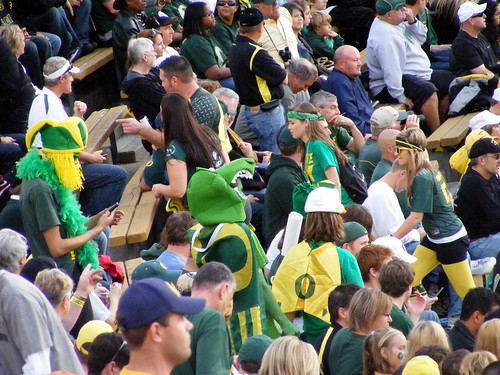
Image : http://www.flickr.com
The history of football and Yale football are more correlated than even the most devout football fans realize. Yale football has been around since the beginning of football and in many respects the Yale football program is responsible for the current game that is played on high school fields on Friday nights and in NFL stadiums on Sundays. While many people are aware that football is a modern adaptation of the game rugby (which is interestingly an adaptation of a similar game played by the ancient Greeks) few people realize how the European centric game of the nineteenth century commuted across the pond to eventually become what is by many measures the most popular sport in America.
In the mid-1800s rugby became a popular pastime on many of the New England area based college campuses that would later become known as members of the Ivy League (a distinction created only as recently as 1954). Chief amongst the rugby enthusiasts were students at Yale, Harvard, and Princeton whose taste for the game was a direct result of the English schooling many pupils had received before enrolling at these American institutions with strong ties to the United Kingdom.
The man widely credited with being the revolutionary of modern American football is Walter Camp, a Connecticut born Yale alum who by the age of only thirty-three had already acquired the title of the "Father of American Football." Camp was an 1880 graduate of Yale University and would go on to serve as the head coach at Yale from 1888-1891 before moving to the west coast to serve as the first coach at Stanford University. Camp took over the head coaching position at Stanford in the school's second season after Stanford played their inaugural 1891 season without a head coach.
Without many of the rules that Walter Camp developed while at Yale the game of football would be unrecognizable. Among the many influential adjustments credited to Camp are innovations that include:
Having downs, i.e. 1st down, 2nd down, 3rd down, and 4th down
Point system (six points for touchdowns, 3 points for field goals, etc.)
Snapping the football from the center to the quarterback
The current and often confusing rule requiring teams have seven men on the line of scrimmage (including receivers)
Inventing the safety and deciding to award it two points
By some accounts the invention of the forward pass (a debatable topic)
In addition to inventing the rules that would shape America's twenty-first century pastime Yale University in New Haven, Connecticut is the birth place of many of college football's most endearing traditions including the oldest rivalry (Harvard vs. Yale began in 1875 - Yale leads the series), the first live college mascot (the Yale bulldog known as Handsome Dan), and the first bowl stadium (the Yale Bowl) which served as the inspiration for subsequent bowls like the renowned Rose Bowl. The terms bowl game and Super Bowl both derive from the title Rose Bowl Stadium (home of the first post-season college football game) which as previously stated took its name and design from the Yale Bowl.
Perhaps most fascinating about the history of football as it relates to Yale football is that if you would have asked most Yale students in the early nineteenth century which event had more potential in terms of popularity between debate and football the overwhelming response received would have stated that debate was expected to be the more popular of the two contests. Long before there was ESPN debate contest results took front page headlines and warranted cheers from rowdy crowds as they sent their teams off to debate rival colleges. Furthering the argument that debate would outpace football in terms of popularity was the unavoidable fact that at the time football faced near extermination due to the rampant nature of serious injury.
We all know how the power struggle between debate matches and football games turned out and now as a result of reading this piece on the history of football as it relates to Yale football readers hopefully have a better understanding of how game that impacts so many lives (and advertising dollars on Super Bowl Sunday) came to be.


